MARE NOSTRUM
“The Mediterranean is not Europe’s border. For Italy, it is at the heart of our international projection.”
Telos: Italy has 8,000 kilometres of coastline, yet it still often thinks of itself as a continental country. Why do we find it so difficult to see ourselves as a maritime power?
Edoardo Rixi: Because for too long we have regarded the sea as a boundary, when in fact it is a route. And today that route is even more important than it was in the past. Italy has almost 8,000 kilometres of coastline, a unique geographical position in the Mediterranean and a maritime economy which, including related industries, is worth more than €220 billion. In 2025, our ports handled around 511 million tonnes of goods, an increase of 3.5%. Those figures describe a maritime power, even though politically we are still often not fully aware that we are one. That is precisely the point: Italy must stop looking at the sea merely as an economic sector. The sea means industry, energy, trade, jobs, security, technology and foreign policy. It is part of our economic sovereignty. We have a major opportunity ahead of us: to turn our position in the Mediterranean into a genuine strategic platform linking Europe, Africa and Asia. But to do so, we need efficient ports, rail and road connections, energy and digital infrastructure, shipbuilding, shipping and, above all, a national vision. The Mediterranean is not Europe’s border. For Italy, it is at the heart of our international projection.
Suez, the Red Sea, Hormuz, trade wars: routes we once regarded primarily as commercial have become matters of national security. Is a port today still an economic asset, or has it also become an instrument of foreign policy?
Today, a port is both. Anyone who continues to regard it merely as an economic asset has not yet understood how the world has changed. The crises in Suez, the Red Sea and Hormuz have shown that, within a matter of hours, a trade route can become an issue of energy and national security. We have seen this in practice: shipping companies have changed their routes, extended sailing times and redesigned their logistics chains. More recently, Maersk and Hapag-Lloyd have announced the return of additional services through Suez, an important signal, albeit one that remains dependent on stability in the region. This tells us something very simple: freedom of navigation is a condition of our economic freedom. That is why Italian ports must be regarded as strategic national infrastructure. This does not mean militarising them, but recognising their geopolitical value. An efficient port enables our companies to export, ensures the arrival of raw materials and energy, strengthens our ability to respond to crises and increases Italy’s weight in its relations with other countries. The Mediterranean is once again becoming a focal point of international competition. In 2025, the region’s main container ports handled more than 72 million TEUs, an increase of 5.9%. Italy must play a leading role in this new geography rather than simply allowing it to pass us by.
Europe is asking the shipping industry to decarbonise, while you have warned that some rules could instead drive traffic and investment out of Europe. How can green transition and competitiveness be reconciled without simply shifting traffic and emissions elsewhere?
The principle is simple: we cannot decarbonise Europe by deindustrialising it. The green transition is necessary, but it must also make industrial sense. If we impose ever higher costs on European operators while completely different rules apply on the other side of the Mediterranean, we risk moving traffic, investment and jobs out of Europe without achieving a proportionate environmental benefit. The European Commission itself is assessing the risk of carbon leakage and loss of competitiveness associated with FuelEU Maritime. It is a real issue and one we cannot ignore. The transition must be accompanied by investment and rules that take international competition into account. We need to support fleet renewal, alternative fuels, the electrification of berths, i.e. cold ironing, digitalisation and all technologies that can genuinely reduce emissions. Above all, we must avoid penalising European maritime transport without taking into account the possibility that traffic may simply shift to ports outside Europe. If a ship bypasses a European port and instead calls at a North African port before continuing on to Europe, we have not reduced emissions: we have merely shifted the problem elsewhere and weakened our own industry. Sustainability and competitiveness must go hand in hand. Otherwise, this is not industrial policy: it is a tax on our ability to compete in global markets.
Your political experience is deeply rooted in the local area. What is lost, and what is gained, when moving from the local to the national level?
I strongly believe that national politics works when it understands the practical realities of local areas. It is one thing to discuss infrastructure from behind a desk; it is quite another to know what it means for a Ligurian company to wait for a rail connection, for a port to need a breakwater, or for a haulier to travel along a particular stretch of the road network. The national dimension, however, brings a different responsibility: you have to reconcile interests that may be very far apart. You have to understand that what Genoa needs may also benefit Milan, Turin, Veneto, Southern Italy and the country’s entire productive system. That is the most important transition, in my view: not losing your local roots, but turning them into the ability to govern at national level. And today that dimension matters even more because the challenges we face do not respect administrative boundaries. Trade routes, energy, security, infrastructure and logistics all have a European and global dimension. That is why I believe the real task of politics is to bring together two things that are too often set against each other: the practical realities of local areas and a national vision. This is how Italy can once again pursue industrial, infrastructure and maritime policies with a clear sense of direction.
Editorial
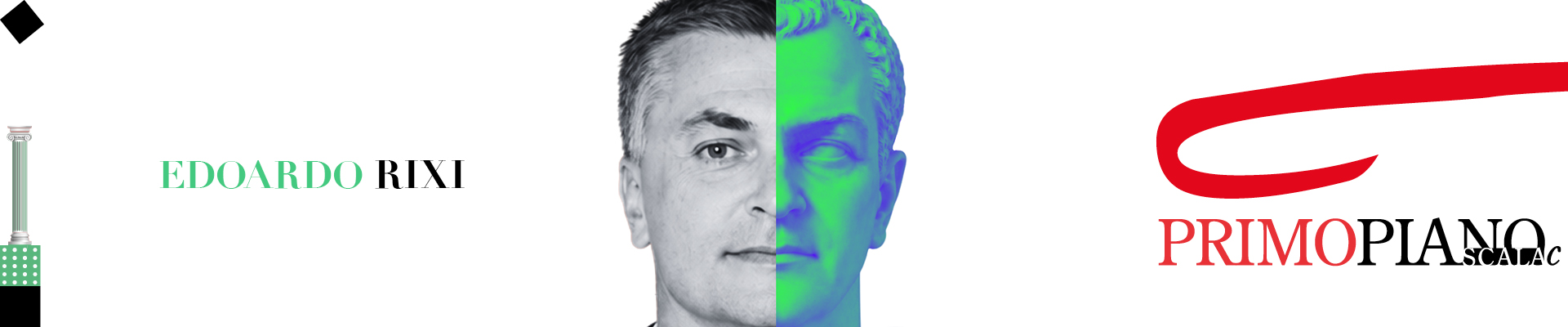
There can be no doubt that Italy is a long peninsula stretching out into the Mediterranean, surrounded by almost eight thousand kilometres of coastline, yet it still often behaves as though its destiny were decided primarily on land. October’s guest on PRIMOPIANOSCALAc, Edoardo Rixi, Deputy Minister for Infrastructure and Transport, is acutely aware of this problem. After all, he comes from a city, Genoa, where forgetting about the sea would be rather difficult. But the issue goes well beyond Genoa, ports and even infrastructure: it concerns the way we Italians see our own country. For a very long time, the Mediterranean was regarded above all as a boundary, and for many it still is. South of Europe, north of Africa, between East and West. A dividing line. This is precisely why Rixi says: “The Mediterranean is not Europe’s border. For Italy, it is at the heart of our international projection.” But seas do not only divide, they connect! The great trading powers understood this long before globalisation, container shipping or today’s networks of world trade existed. Venice built its fortune on the sea, and Genoa did the same. Centuries later, united Italy seems to have a more complicated relationship with its own geography. We have ports, shipyards, shipowners, logistics companies and a geographical position that many other European countries could only wish for. Yet the idea of being a maritime power has never really entered our political vocabulary with the same ease with which we speak about industry, manufacturing or Southern Italy. Perhaps because, when everything works as it should, the sea tends to become invisible? We walk into a supermarket and find products that have arrived from the other side of the world. We turn on the heating, use a computer, buy a car, and rarely stop to ask ourselves through which ports, straits and routes the energy, raw materials or components that make all this possible have travelled. Then something happens that jolts us awake. A ship runs aground in the Suez Canal, trade routes through the Red Sea become unsafe, the Strait of Hormuz once again moves to the centre of international tensions. Shipping companies change course, journey times lengthen and costs rise. Suddenly, we discover that the blue line on the map reaches directly into our factories, into energy prices and into our pockets. Geopolitics, after all, also has this ability: it makes visible what in normal times we do not see. In this case, it also brings something else into view, something that is very clear to Rixi. A port is not simply the place where a ship loads or unloads goods; it is the point where industrial policy, energy, security, international trade and relations with other countries all meet. The same applies to the infrastructure that extends inland from a port. A perfectly efficient port is of little use if, once goods have been unloaded, it takes too long for them to reach a railway, an intermodal hub or an industrial district. Talking about the sea therefore necessarily means talking about roads and railways as well. There is also a more uncomfortable issue raised by our Deputy Minister: The European Union rightly wants to reduce emissions from maritime transport. But the sea is, by definition, a space in which European rules encounter operators, ports and countries that are not European. If a rule makes calling at European ports less attractive and simply shifts traffic a few miles further south, the environmental benefit may prove less clear than it appears on paper. It is a problem we are familiar with in other sectors too: reconciling ambitious environmental objectives with the ability of European companies to compete. The green transition remains necessary, but economic geography does not end at the borders of the Union, and ignoring that fact risks producing outcomes very different from those intended. Perhaps this is one of the most interesting points to emerge from the conversation with Rixi: infrastructure and foreign policy, the environment and industry, ports and security, local interests and the national interest are still too often treated as separate issues, although they are closely interconnected. The image on the October cover of PRIMOPIANOSCALAc is once again built around a clear division. On one side, the interviewee’s face in black and white. On the other, the head of a classical marble sculpture treated in pop colours. Two dimensions in dialogue, as different parts of the same idea. The same logic is reflected in the interviewee’s name. The typeface chosen is Didot, designed in 1784.
Mariella Palazzolo
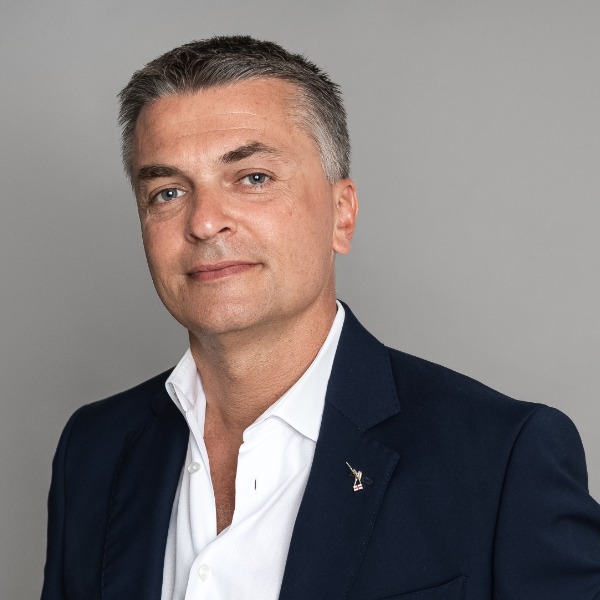
Edoardo Rixi is Deputy Minister for Infrastructures and Transport and a member of the Chamber of Deputies in Italy’s 19th Legislature. Before devoting himself fully to politics, he worked in the private sector, including in commercial roles focused on foreign markets, and collaborated with the University of Genoa, where he was a subject specialist in the History of Economic Thought. His career in public institutions began in 2002, when he was elected to Genoa City Council. He subsequently served as a member of the Chamber of Deputies and of the Liguria Regional Council before becoming Councillor for Economic Development in the Liguria Regional Government in 2015, with responsibilities including industry, trade, energy, ports and logistics. He returned to the Chamber of Deputies in 2018 and, that same year, was appointed first Undersecretary and then Deputy Minister for Infrastructure and Transport in the first Conte Government. In 2022, he was re-elected to the Chamber and once again appointed Deputy Minister in the Meloni Government. Born in Genoa in 1974, he attended the Economics and Business Administration Programme at Mercuria Business School–Vantaa Polytechnic and the University of Helsinki. He graduated in Economics and Commerce from the University of Genoa with a thesis on the restructuring of the banking system in the Scandinavian countries and, in 2014, attended the Master of Public Administration programme at SDA Bocconi. Mountaineering has long been one of his passions. He has taken part in CAI and CAAI expeditions in the Himalayas, the Andes and Kenya, and is an instructor at the “Bartolomeo Figari” mountaineering school of the Genoa branch of the Italian Alpine Club. One curious detail: after completing his classical secondary education, he passed the entrance examinations for the Military Academy of Modena, but left before taking the oath. His path could have been very different indeed!