A SONG FOR A LIFETIME
“If a song means nothing to you, you forget it. If it truly moves you, it can stay with you for the rest of your life.”
Telos: Your songs speak of love, freedom, anxieties and the changes of entire generations. What does a song need for people to recognise themselves in its words?
MOGOL: It needs to have something genuine. I have always written starting from life, from experiences, from people, from the things that happen. We all have the same feelings: there are times when we are happy and others when we are not; we feel love, pain, jealousy. This does not change from one generation to another. The way we express these feelings may change, because society and language change, but the feelings remain. Music has always been fundamental to me too. When I write lyrics, I listen to what the music suggests to me. If it expresses intimacy, the words must follow that direction; if it changes, if it grows, the words must follow it. Music and lyrics must express the same feeling. The lyrics only come by breathing with the music. This, I believe, is what allows a song written many years ago to still speak to people who were not even born at the time.
Today, a song can reach millions of people in a very short time, but it can just as quickly be replaced by the next one. Is there still room for a song that can stay with someone for a lifetime?
I believe people still need that. The problem is not the people, it is the songs. Today, many songs last for a very short time and do not remain in our memory as they once did. A beautiful song, on the other hand, can cross generations. There are very young people who know and sing songs written many years before they were born. This means that when a song truly has something to say, time is no obstacle. Melody is fundamental. If melody is lost, something important is lost with it. But we must seek quality and, above all, we need competent people who are able to recognise it and bring it to the public. If a song says nothing to you, you forget it. If it truly moves you, it can stay with you for a lifetime.
You have lived through more than sixty years of Italian music. There have been periods when Italian songs have also made their mark beyond our national borders. What made that period possible? And what significance do you attach to songs as a form of popular culture?
There have been different periods. For a time, France was considered a benchmark for songwriting. Then, in Italy, we had the great era of the Genoese singer-songwriters and, later, a period when I believe our country succeeded in producing some of the finest songs. It was a time of great creativity and quality, and its success extended well beyond Italy. I have been told that the songs I have written have sold 523 million records worldwide. That is an enormous figure, and it gives a sense of just how far we were able to go. Popular culture carries an enormous responsibility, precisely because it reaches everyone. Popular does not mean inferior. Culture is culture when it is able to speak to people. Songs are listened to, sung and learnt by heart and, when they are of a high standard, they can contribute to people’s cultural development. If quality is lacking, that function is lost. I do not believe in a distinction between highbrow music and music that belongs to popular culture: there is good music and bad music. That is why I insist on competence. Those who choose which songs to present to the public must be able to recognise quality. You need to be able to recognise a good song and give it the chance to be heard.
If you had to identify the moment when you truly became an author in your own right, which would you choose?
My real beginning as an author was with Lucio Battisti. Before that, I mainly wrote Italian versions of American, British and French songs: I would start from those songs and write Italian lyrics to their music. With Lucio, something completely different began. It was no longer a matter of adapting a song created elsewhere, but of creating something new together. The first time we met, however, I was not particularly impressed. He played me one of his songs and I told him frankly: “It’s not that good.” He replied, “I agree,” and gave me a big smile. Then things turned out very differently. At first, Lucio did not even want to sing, and I was the one who insisted that he should. He was an extraordinary student of music: he spent seven hours a day studying the world’s greatest performers and the work of the greatest songwriters and composers. I wrote the lyrics to his music. I had enormous admiration for him. If you ask me to choose a single episode, I find it difficult, because so many things happened. I have had many wonderful moments in my life and I consider myself very fortunate. I can say that the whole of my life as a songwriter with Lucio is, for me, a wonderful memory.
Editorial
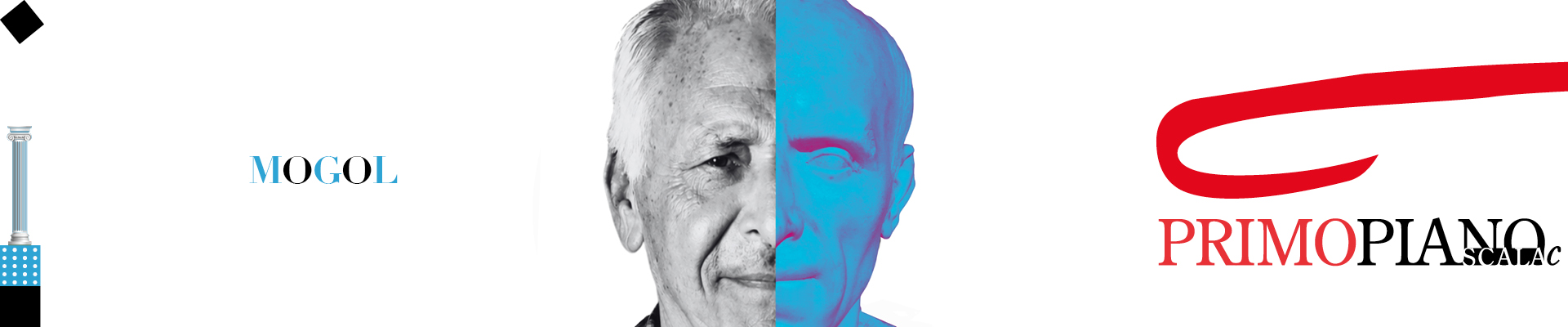
We live in an age that seems increasingly uneasy with permanence. News is consumed within hours, images scroll past without leaving a trace, and what commands our collective attention today may disappear tomorrow without any apparent consequence. Culture, too, is affected by this acceleration. Not because less is being produced, quite the opposite is probably true, but because the interval between the creation of something and its replacement by something else has shrunk dramatically. Music is perhaps one of the clearest vantage points from which to observe this transformation. Platforms have made available, within seconds, a quantity of music that no previous generation could have imagined. This has expanded our range of choice enormously, but it also raises a different question: how much of what we listen to is destined to endure? This is one of the themes we explored with the interviewee in the August issue of PRIMOPIANOSCALAc, Mogol. His words offer many points for reflection. Every age tends to remember the best of the one before it and forget its more mediocre output. It would therefore be far too simple to set the great songs of the past against the music of today. More interesting is to ask what allows a work of popular culture, which Mogol values so highly, to transcend its own time and become part of a shared cultural heritage. A song that is learnt, sung and passed on enters our language, becomes associated with individual experiences, accompanies moments in our lives and ultimately helps shape a form of shared memory. The same process applies not only to music, but also to cinema, literature, theatre and, more broadly, to everything a society chooses to preserve. The recent death of Francesco Guccini makes this reflection particularly timely. In recent weeks, people have remembered not only his songs, but also his poetry, his novels, his places, his relationship with Italian history and his ability to speak to different generations, a quality that ran through his entire body of work. Asked what Guccini leaves behind, Mogol used a precise expression: he helped to “keep popular culture at a high level”. And he added that popular does not mean inferior. For Mogol, the question then becomes what allows a work to endure over time and, at the same time, who plays a part in that selection. The sheer abundance of content has weakened the mediating role that, for many years, belonged to publishers, critics, journalists, programmers and artistic directors. It is difficult to feel nostalgic for a system in which a few people decided what many others would be able to hear or read. But it would be equally naive to assume that the absence of mediation automatically means greater cultural freedom. Intermediaries have not disappeared. In many cases, they have simply changed form. Human selection has been joined by algorithms capable of influencing an ever larger share of our choices. It is at this point that the idea of expertise, on which Mogol repeatedly insists in the interview published in this issue of PRIMOPIANOSCALAc, takes on a significance that goes far beyond music. Expertise means being able to distinguish, to choose and to recognise value. It does not mean dictating from above what people should like, but creating the conditions in which what deserves attention is not simply swept away. This may seem somewhat removed from contemporary ideas of cultural consumption... but it raises a question that remains highly relevant: does having access to more culture necessarily mean that we truly take it in? It is no coincidence that this same idea reappears in a field that seems far removed from songs. In 2024, Mogol published La Rinascita. La salute è il risultato di una cultura assimilata e applicata con rigore (Rebirth. Health is the result of knowledge absorbed and rigorously applied), a book devoted to prevention and written with contributions from doctors and researchers. What is interesting is the continuity of the underlying idea: knowledge acquires value when it is absorbed, internalised and translated into behaviour. It is also one of the less familiar aspects of a personality that is difficult to confine to his work as an author of songs. Giulio Rapetti’s life has naturally been filled with music, but also with travel, underwater exploration, horses, teaching and a curiosity that has drawn him towards very different fields. Perhaps this helps explain a life shaped more by the desire to experience new things than by the wish to preserve what had already been achieved. On 17 August, Mogol turned ninety. A milestone that inevitably invites reflection on longevity. Perhaps this is the most interesting aspect of a conversation with someone who has lived through almost a century and more than sixty years of Italian culture: to ask what, from the present, will succeed in becoming part of the past. And, above all, what we will have chosen to remember. The August cover of PRIMOPIANOSCALAc is also built around a clear division. On one side is the interviewee’s face, in black and white. On the other, the head of a classical marble sculpture treated in pop colours. Two dimensions that interact as parts of the same idea. The same logic shapes the treatment of the interviewee’s name. The typeface chosen is Didot, designed in 1784.
Mariella Palazzolo
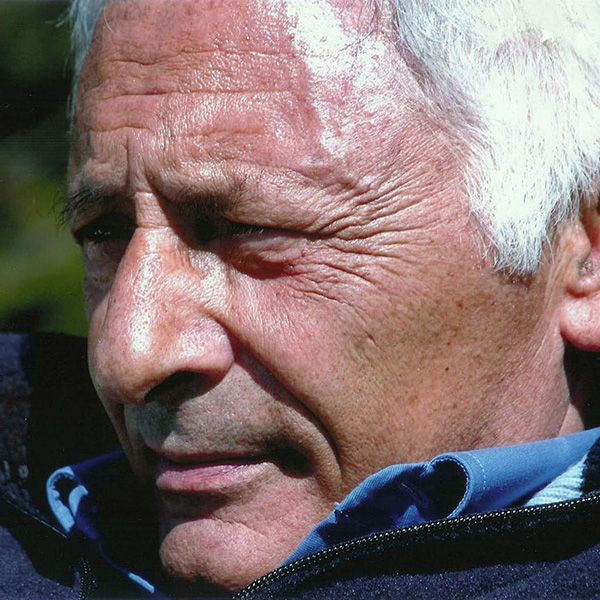
Giulio Rapetti Mogol is an author of songs, music publisher and writer, and one of the figures who have most profoundly shaped the history of Italian music. The son of Mariano Rapetti, an executive at the Ricordi publishing house and a songwriter under the pseudonym Calibi, he began working in the music industry at a very young age. It was SIAE that assigned him the pseudonym Mogol, which would later legally become part of his surname. He initially wrote Italian versions of foreign songs, before forming, from the mid-1960s onwards, one of the most important creative partnerships in Italian music with Lucio Battisti. Over the course of his career, he has written 1,776 songs and worked with, among others, Mina, Celentano, Morandi, Cocciante, Mango and Gianni Bella. In 1992, he founded the CET, Centro Europeo di Toscolano, in Umbria, a school dedicated to training songwriters, composers and performers. An avid traveller, with a passion for horses and diving, he has travelled around the world on his own and, in 1970, rode the 600 kilometres from Milan to Rome on horseback with Battisti. Over the years, his interests have extended well beyond music, from education to health and prevention. A practising Catholic, he considers faith a central point of reference in his life. Born in Milan on 17 August 1936, he is married to Daniela, who is 33 years younger than him and inspired Dormi amore, the song to which he says he feels most deeply attached.