TO LEAD AND TO BE LED
“A dual aspiration, seemingly contradictory: on the one hand, the desire for strong authority; on the other, the demand for broader, more direct citizen participation.”
Telos: Who currently appears to be the frontrunner in the race for the Élysée in 2027, and what do you believe will be the decisive factors in the next presidential election?
MARC LAZAR: At present, the clear frontrunner in the 2027 presidential election, at least to reach the second round, is Marine Le Pen. She has already announced her candidacy, although her legal position remains uncertain. Despite this situation, her party, the Rassemblement National (RN), continues to benefit from particularly favourable electoral momentum. All opinion polls indicate that she and Jordan Bardella, the RN's president, are currently the most popular political figures in the country, and that Marine Le Pen would finish comfortably ahead in the first round, scheduled for 18 April 2027. The current political landscape also works in her favour. To her right, Éric Zemmour could secure between 5 and 6% of the vote, but he does not pose a genuine threat. On the opposite side of the political spectrum, Jean-Luc Mélenchon, leader of the radical left-wing populist party La France Insoumise, still commands a solid electoral base, but now arouses greater concern among French voters than the RN itself. The reformist left, by contrast, appears electorally weak and fragmented among a multitude of potential candidates. At the centre of the political spectrum, competition has already begun between two of President Macron's former Prime Ministers, Édouard Philippe and Gabriel Attal, with Philippe, at least for the time being, appearing to hold the advantage. Les Républicains are represented by Bruno Retailleau, who faces considerable difficulty in reuniting the French right: part of it is looking towards the centre, while another increasingly appears inclined to rally behind the RN. This does not, however, mean that Marine Le Pen will become the ninth President of the Fifth Republic. Much will depend, first and foremost, on the opponent she faces in the second round. It will also be crucial to see whether French voters are willing to elect a candidate burdened by a serious criminal conviction. Finally, voters will assess the credibility of the solutions put forward by the candidates to address the issues that are likely to dominate the campaign: economic growth, restoring the public finances, inequality, the state of the healthcare system, immigration, security, the future of European integration, and the major international challenges directly affecting France.
The rise of the right has become one of the defining features of contemporary European politics. In your view, what are the main differences between the French and the Italian cases?
France is characterised by a dual polarisation at opposite ends of the political spectrum, embodied by the Rassemblement National and La France Insoumise. A significant section of the French right looks with admiration at the Italian experience and shares what could be described as a genuine "Meloni-mania". Giorgia Meloni is widely regarded as the leader of a centre-right coalition perceived to be both cohesive and stable. Her nationalism, her determination to tackle illegal immigration and insecurity, her commitment to challenging what she describes as the left's "cultural hegemony", her criticism of a European Union seen as excessively bureaucratic, and her support for Ukraine are all viewed positively. The differences, however, remain substantial. A significant part of the French right, for example, does not share Giorgia Meloni's references to God and the defence of traditional values. The most important difference, however, is this: since 1994, Italy's centre-right parties have become accustomed to contesting elections as a united coalition, with a common programme and a recognised leader, first Silvio Berlusconi and now Giorgia Meloni, as leader of the coalition's dominant party. In France, by contrast, such a union of the right does not yet exist. Historically, first the Front National and later the Rassemblement National have always opposed this approach, and this remains Marine Le Pen's position today. Jordan Bardella has not ruled out such a prospect, but only after a potential RN victory in the presidential election. Should that happen, it is highly likely that many leading figures and elected representatives of Les Républicains would agree to forge an alliance with the RN ahead of the subsequent parliamentary elections, support the new government, and join it.
How is Italian politics perceived in France today and, more specifically, how is Giorgia Meloni's government viewed?
Until 2022, both the French right and the left tended to have a rather negative view of Italian politics, seeing it as unstable, inefficient, corrupt and dominated by clientelist practices. Today, the situation has changed significantly. As already mentioned, the French right expresses considerable admiration for Giorgia Meloni's government. What was once regarded as a model to avoid has, for many, become a source of inspiration. The attitude of the French left is quite the opposite. In its view, Giorgia Meloni represents a post-fascist, conservative and reactionary form of right-wing politics. Her government is described as far right, and its policies are portrayed as a threat to democracy. From this perspective, the Italian experience is held up as a cautionary example. For its part, the French government is now seeking to move beyond the tensions of recent years. As demonstrated by the Franco-Italian intergovernmental summit held in Antibes on 25 June, it intends to strengthen cooperation with the Italian government, while remaining fully aware that significant differences persist on a number of fundamental issues.
Traditional political parties appear to be facing a profound crisis. What is your assessment of this development?
Yes, traditional parties, on both the left and the right, are going through a profound crisis. More broadly, our democracies themselves are experiencing a period of evident difficulty. Across Europe, and even more markedly in France, research conducted in recent years has consistently revealed widespread public distrust of politics. Elected representatives and political leaders are perceived by a large share of the public as corrupt, motivated solely by personal interests, and incapable of understanding citizens' real concerns. This is compounded by weak economic growth, unemployment, multiple forms of inequality, social, gender, generational and territorial, and the increasing precariousness of the labour market. Together, these factors fuel deep social discontent and reinforce the perception that democracy is no longer able to fulfil its promise of equality. At the same time, Europeans are grappling with an increasingly pressing cultural and identity question. Globalisation, European integration and the growing diversity of our societies, against a backdrop of demographic decline, raise a fundamental question: how do we define our identity today? Do we think of ourselves first and foremost as Florentines, Tuscans, Italians or Europeans? Traditional political parties have struggled to provide convincing answers to these questions. This has created opportunities for a wide range of parties and leaders, including the Rassemblement National, Fratelli d'Italia and, in a very different political register, the Five Star Movement and La France Insoumise, all of which share a significant populist dimension. These movements present themselves as the true interpreters of the popular will, promise to restore power to the people, and make extensive use of the rhetoric of political voluntarism. In doing so, they have succeeded in capturing a dual aspiration that appears contradictory but is deeply rooted in both France and Italy: on the one hand, the desire for strong authority, which should not be confused with authoritarianism, capable of providing purpose and direction to public action; on the other, the demand for broader and more direct citizen participation in democratic decision-making.
Editorial
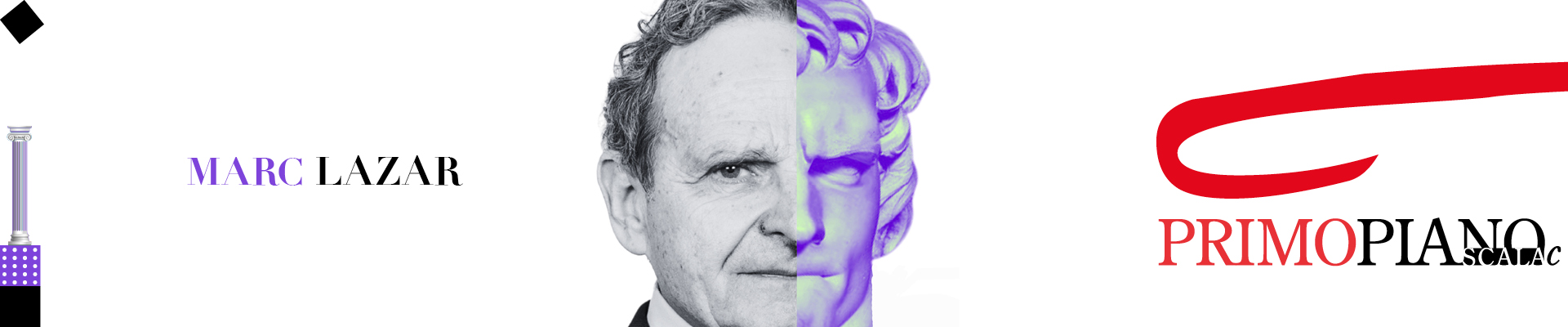
Every political era produces its own vocabulary. And every vocabulary, sooner or later, ceases to explain reality. Perhaps this is precisely the moment Europe is now experiencing. We continue to describe public debate using familiar categories, right and left, moderates and radicals, pro-Europeans and sovereigntists, yet these definitions seem increasingly unable to capture what truly drives voters. This is not a uniquely French or Italian phenomenon. It is a transformation unfolding across the entire continent. The great ideological loyalties that shaped the post-war period have gradually weakened, while new concerns have emerged, often cutting across traditional political divides: the demand for security, the need for social protection, questions of national identity, attitudes towards immigration, trust in public institutions, and perceptions of the effectiveness of the state. Against this backdrop, even the labels we use to describe political leaders are becoming less precise. Calling someone "populist", "sovereigntist" or "conservative" may be descriptively accurate, but it rarely explains why they attract public support. Equally, describing a political project as "progressive" or "moderate" does not necessarily help us understand why it may struggle electorally. European politics is becoming less organised around established ideological identities and increasingly centred on the ability to respond to a widespread sense of uncertainty. This is where political competition is now being fought, not so much over competing theoretical models, but over the credibility of the answers offered to societies that perceive the future as more fragile, more unstable and more difficult to govern. From this perspective, France provides a particularly valuable vantage point. Not because it necessarily foreshadows the future of every other European country, but because the tensions it is experiencing, the crisis of traditional parties, the reconfiguration of the political landscape, and the evolving relationship between institutions and public opinion, are especially pronounced and often illuminate trends common to many Western democracies. Understanding what is happening across the Alps therefore also means reflecting on Europe's future. It means asking whether we are witnessing a simple political alternation or a more profound redefinition of democratic representation itself. It is a question that concerns everyone, regardless of political preference, because it touches on the very way in which our societies now seek to build consensus and democratic legitimacy. The July guest of PRIMOPIANOSCALAc, the French political scientist Marc Lazar, offers an interpretation that goes beyond day-to-day politics and the simplifications of public debate. Through his analysis of the French case, he provides valuable insights into the transformations reshaping the European political landscape, reminding us that, before governments or leaders changed, it was the questions citizens ask of politics that changed. Particularly thought-provoking is his reference to political voluntarism, the idea that solutions to collective problems depend above all on the determination of those in power: if political will is sufficiently strong, any obstacle can be overcome. This approach downplays the constraints imposed by economic realities, legal frameworks or international commitments, restoring to politics an image of almost unlimited decision-making power. It is hardly surprising that such rhetoric resonates in an age marked by uncertainty and disillusionment. Faced with societies that perceive the state as less effective and institutions as weaker, the promise of "the will to act" often appears more persuasive than a discussion about whether public policies are genuinely feasible. For the 2026 series of PRIMOPIANOSCALAc covers, each image is built around a clear visual division. On one side is a black-and-white portrait of the interviewee. On the other, the head of a classical marble sculpture rendered in vivid pop colours. Two visual dimensions that interact as complementary parts of the same concept. The same design principle is reflected in the interviewee's name: the first name adopts one of the colours used in the sculpture, while the surname remains black. The typeface is Didot, originally designed in 1784. On the July cover, the fusion between the portrait and the sculpture achieves a particularly striking balance. From the hairline to the gaze, the two halves appear as though they have always belonged to the same figure.
Mariella Palazzolo

Marc Lazar is a French historian and political scientist, Emeritus Professor of History and Political Sociology at Sciences Po Paris and Professor at Luiss University in Rome. His research focuses on the evolution of European democracies, with particular emphasis on the French and Italian political systems, political parties, populism, political representation and the changing nature of democratic participation. He is the author of numerous books and essays, translated into several languages. A regular commentator in French, Italian and English-language media, and a member of leading European research institutes, he is widely recognised as one of the foremost experts on contemporary political developments in France, Italy and the European Union. Beyond his academic work, he has a passion for literature, theatre and cinema. He enjoys both the mountains and the countryside, with a particular fondness for the Amalfi Coast, Umbria, the Alps, Burgundy and the South of France. He is a keen sports enthusiast, follows football closely, and divides his time between his two favourite cities, Paris and Rome. Among the books he considers most influential are Life and Fate by Vasily Grossman, The Red and the Black by Stendhal, The Cloven Viscount by Italo Calvino, and American Pastoral by Philip Roth. He is also a great admirer of French, Italian and Japanese cuisine.