WHAT DO YOU KNOW ABOUT THE SOLOMON ISLANDS?
“For far too long, the world has viewed the Solomon Islands through the lens of their strategic location. The time has come to see them for what they truly are: a nation with its own voice and its own future.”
Telos: What will be your three decisions in your first hundred days of government?
MATTHEW WALE: During its first hundred days, my government will focus on three core priorities. The first will be to strengthen transparency, integrity and accountability across public institutions, because public trust is the foundation of good governance. The second will be to address the economic challenges affecting everyday family life, with particular emphasis on creating opportunities for young people and generating jobs. The third will be to launch a constructive dialogue with the provinces, local communities and the private sector to develop a shared vision for the country's future development. Our aim is to build a stronger, fairer and more united nation, where the benefits of growth are shared by all citizens.
How do you intend to balance relations with China, Australia, New Zealand and the United States?
As an independent state and a member of the Commonwealth family, the Solomon Islands intend to maintain constructive relations with all international partners. However, my government believes that national security and foreign policy must be guided by transparency, democratic accountability and the interests of the Solomon Islands people. For this reason, we have initiated a review of the security agreement signed with China in 2022. The agreement allowed, at the request of the Solomon Islands Government, the deployment of Chinese police and security personnel in the country, and it generated considerable debate both regionally and internationally. Many citizens expressed concerns not only about the substance of the agreement, but also about the manner in which it was negotiated and the limited opportunities for proper public and parliamentary scrutiny. Our government believes that decisions of such significance must be examined with the utmost care and transparency. At the same time, we have begun discussions with Australia on a comprehensive new cooperation treaty aimed at strengthening ties between our two countries in areas such as security, economic development, education and training, and community resilience. Australia, New Zealand and the United States have long been important partners of the Solomon Islands, and we intend to deepen these relationships while continuing to maintain an open and respectful dialogue with China. Our priority is not to choose between major powers. For too long, the world has viewed the Solomon Islands through the lens of their strategic location. The time has come to see them for what they truly are: a nation with its own voice and its own future.
Tourism, fisheries and natural resources: where do you see the greatest potential for development?
My islands are blessed with extraordinary natural resources and a unique environmental heritage. Fisheries will continue to be one of the pillars of our economy, and we are determined to increase the value they generate for the country through greater investment and stronger participation by local communities. At the same time, I see enormous potential in sustainable tourism, which can showcase our culture, our history and the remarkable beauty of our islands while creating new opportunities for our people. As for our natural resources, our responsibility is to ensure that they are managed sustainably and that the benefits remain within the Solomon Islands. Our goal is to build a more diversified economy, one that is i capable of creating opportunities for future generations.
What is the most important lesson you learned during your years in opposition?
My years in opposition taught me that political change rarely happens according to the timetable we would like. I experienced setbacks and disappointments. I think of 2019, when many of us hoped the country would take a different path, only for Parliament to make another choice. I also think of the debate surrounding the security agreement with China in 2022, a decision which, in my view, warranted far broader public and parliamentary scrutiny given its significance for the future of the Solomon Islands. Those experiences reinforced my understanding that many citizens share a common concern: the feeling that the most important decisions are too often made without their involvement, and that the benefits of economic growth are not distributed fairly. It is what I have often described as elite capture: the concentration of power, opportunity and resources in the hands of a few, while the majority are left behind. That conviction has shaped my political journey and continues to guide me today as Prime Minister. If there is one lesson I carry with me, it is that meaningful change requires determination, consistency and the willingness to keep listening, even when you are not in government. The challenges facing the Solomon Islands will not be solved overnight, but I believe our country now has an opportunity to build stronger institutions, greater transparency and a closer relationship between government and the people it serves.
Editorial
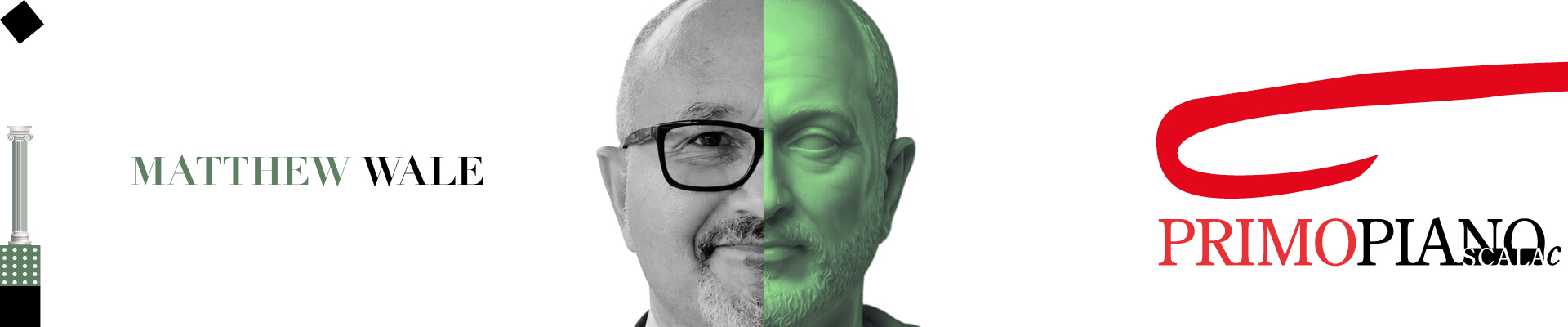
The Solomon Islands are an archipelago of more than 900 islands scattered across the South Pacific, east of Papua New Guinea and around 2,000 kilometres from Australia. They are home to just over 700,000 people, spread across a vast maritime domain but a relatively small land area. With their tropical rainforests, volcanoes, some of the world's richest coral reefs and among the most spectacular diving sites in the Pacific, the Solomon Islands are one of the most remarkable and least known natural destinations on the planet. The waters surrounding the archipelago also preserve numerous traces of the Second World War, from shipwrecks to aircraft lost during the Guadalcanal campaign, one of the decisive battles of the Pacific theatre. Yet the Solomon Islands tend to enter the international spotlight only when someone fears they may be falling within another country's sphere of influence. In recent years, it has been China that has drawn global attention to the country. The security agreement signed with Beijing in 2022, which authorised the possible deployment of Chinese security personnel to the archipelago and raised the prospect of a future Chinese strategic presence in the South Pacific, suddenly transformed the Solomon Islands from a remote tropical archipelago into a focal point of great-power competition. The controversy was heightened by the manner in which the agreement was negotiated, under a level of secrecy that many considered incompatible with the historic significance of the decision. For a few months, the Solomon Islands became a geopolitical case study. Then, as so often happens with small states, they faded from view once again. The Solomon Islands are a Commonwealth parliamentary monarchy. They recognise King Charles III as Head of State and share with several other Pacific nations institutions shaped by the British constitutional tradition. Over the years, this framework has provided a degree of democratic stability, despite the profound geographical, economic and social differences that characterise the various provinces of the archipelago. It is within this context that the rise of Matthew Wale, guest of PRIMOPIANOSCALAc, should be understood. Elected Prime Minister in May 2026 after nearly two decades in Parliament and many years in opposition, his victory was not merely the result of a change in parliamentary numbers. It was also the culmination of a long political journey. For years, Wale was regarded as a divisive figure, more effective at exposing problems than at building alliances. His opponents portrayed him as a perpetual critic, capable of attracting attention but not of governing. Even some observers who admired his competence questioned whether he could assemble a coalition broad enough to secure power. In recent years, however, something changed. The same leader who had built much of his public profile through often uncompromising opposition gradually adopted a more pragmatic approach. He did not abandon his criticisms, particularly of the security agreement with China, but he stopped presenting himself as the champion of total rupture. That political evolution was probably one of the keys to his victory. Yet the interview reveals something that goes beyond the immediate political story. Wale repeatedly returns to a concept he describes as elite capture: the concentration of power, opportunity and resources in the hands of a privileged minority. At first glance, the expression may appear specific to the realities of the Solomon Islands. In truth, it reflects one of the defining debates across contemporary democracies: the benefits of globalisation, technological innovation and economic growth have not been distributed equally. Perhaps that is why the story of Matthew Wale and the Solomon Islands deserves closer attention. The questions it raises are far less remote than they may first appear. For the 2026 series of PRIMOPIANOSCALAc covers, the visual concept is built around a sharp division. On one side appears the interviewee’s face, rendered in black and white. On the other, the head of a classical marble sculpture treated in pop colours. Two dimensions that converse as parts of the same idea. The same logic informs the treatment of the interviewee’s name: the first name adopts one of the statue’s tones, while the surname remains black. The typeface chosen is Didot, designed in 1784.
Mariella Palazzolo
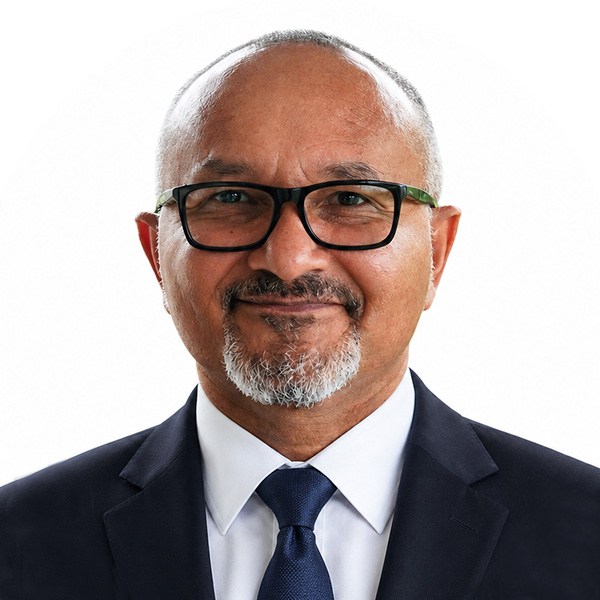
Matthew Wale has been Prime Minister of the Solomon Islands since May 2026 and is one of the most influential figures in the politics of the Pacific archipelago. He is the leader of the Solomon Islands Democratic Party (SIDP), one of the country's major political parties, a liberal-democratic formation that has made institutional transparency and the defence of national sovereignty two of its principal political causes. He was first elected to the National Parliament in 2008.Wale represents the Aoke/Langalanga constituency on the island of Malaita, the second most populous island in the Solomon Islands after Guadalcanal, where the capital, Honiara, is located. From 2019 to 2026, he served as Leader of the Opposition, becoming one of the most outspoken critics of the governments of Manasseh Sogavare and, subsequently, Jeremiah Manele. In 2025, he was appointed a Commander of the Order of the British Empire (CBE) in recognition of his contribution to public and political life in the Solomon Islands.