BUSINESS AND THE STATE
“The challenge is to improve the overall quality of legislation by simplifying the existing framework and ensuring greater consistency between policy objectives and compliance burdens.”
Telos: What is Assonime and what does it do?
STEFANO FIRPO: Assonime is the association representing Italy’s leading companies and works to improve the regulatory, economic, and institutional environment in which they operate. Our membership includes companies from every major economic sector: industry, services, banking, and insurance. Our activity focuses on analysing public policies and legislation affecting businesses, with particular attention to taxation, corporate law, financial markets, and corporate governance. The goal is to help build a regulatory framework that is simpler, more stable, and growth-oriented. In this sense, Assonime acts as a bridge between the business world and institutions, providing independent analysis and practical proposals aimed at strengthening the productive system and the competitiveness of the Italian economy within the European and international context. Alongside this analytical work, it promotes dialogue among companies, policymakers, and Academia, contributing to the debate on the major transformations affecting the economy and industrial systems. From this perspective, the Association also serves as a platform for listening to business needs, gathering concerns and critical issues emerging from companies’ day-to-day experience and translating them into policy proposals. The objective is to help create an environment favourable to entrepreneurship, capable of supporting growth, investment, and innovation.
Assonime has long been an authoritative voice in the economic and legal debate. What is currently the main difficulty companies face in their relationship with the regulatory and institutional framework?
The main difficulty lies in the complexity and constant evolution of the regulatory framework. Companies need clear, stable and predictable rules to plan investments, innovation and growth over the medium to long term. In recent years, there has been an increasing layering of laws and regulatory measures which, although often introduced with legitimate and widely shared objectives, risk creating uncertainty and ever higher compliance costs. This applies both at national level and in relation to European regulation, where the intensity of legislative activity has increased significantly. The challenge, therefore, is to improve the overall quality of legislation by simplifying the existing framework and ensuring greater consistency between policy objectives and compliance burdens. In many cases, the issue concerns not only the content of the rules, but also their application and interpretation. Complex procedures, lengthy timeframes and a regulatory framework that is not always properly coordinated represent a constraint on companies’ ability to seize development opportunities, particularly in sectors characterised by rapid technological change and strong competitive pressures.
As Director General, what priorities have you set and what approach are you taking in leading the Association at this stage?
Assonime is a remarkable and truly unique association, and I consider it a real privilege to lead it at such a turbulent yet fascinating time of change. Our strengths lie in our technical expertise, independence of judgement and the authority we are recognised as having in institutional dialogue. My priority has been to reinforce these qualities to give greater assertiveness and visibility to our position as an association serving all businesses. Today, this enables us to provide our member companies with high value-added services and to contribute, through our ongoing dialogue with institutions, an authoritative and influential capacity for constructive policy development. The approach we are following is the one that has always distinguished the association: in-depth analysis, constant engagement with member companies on the issues they share, and constructive dialogue with national and European institutions aimed at identifying effective and practical solutions.
Your career spans public administration, economic policy and business representation: is there a particular experience that you consider decisive in shaping the way you see things today?
My professional background is rather unusual and unconventional: ten years of intensive work in a major bank, followed by ten years serving public institutions, and now experience in the world of business associations, have enabled me to work at the intersection of business, finance and institutions. Certainly, my experience as a public servant, between the Ministry of Economic Development and Palazzo Chigi, has had a profound impact on me. As someone from Turin suddenly immersed in Rome, I was fortunate to serve within government ministries while benefiting from considerable autonomy and trust from the political leaders I worked with. This allowed me to see first-hand how possible it is to improve things and make a tangible impact. Of course, this requires a significant degree of reform-minded courage, but the achievements secured in areas such as minibonds, the startup legislation, investment-attraction measures, the Industry 4.0 Plan, policies on the space economy, the work carried out on the digitalisation of public administration, and the many outstanding professionals with whom I worked along the way, remain for me a wealth of knowledge, experience and relationships that I continue to draw upon every day in order to bring energy to what I do. I believe there is a strong need for people who have been able to move between both the private and public sectors. These are worlds that need to work together more closely, interact more effectively, and even become more interconnected. Only through this ability to understand one another and cross-fertilise ideas can we build policies that genuinely support the growth and modernisation of our country.
Editorial
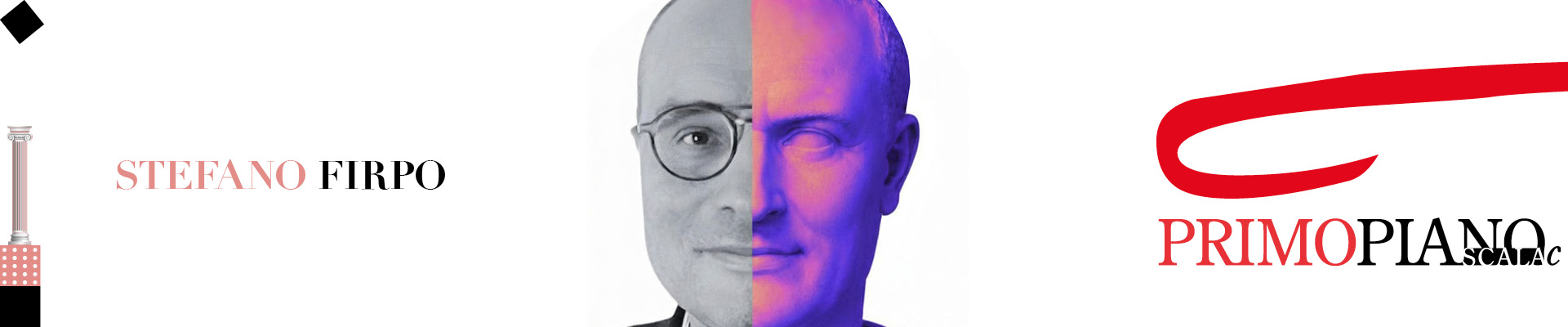
The most striking aspect of this month’s PRIMOPIANOSCALAc’s guest is a figure that has become increasingly rare in the Italian public debate: the interpreter between different worlds. Finance, public administration, industry, economic policy, spheres which, in Italy, still too often speak incompatible languages, when they are not openly distrustful of one another. Yet it is precisely at this point of contact, where private interests and the public good confront one another without mutual demonisation, that the quality of a modern economic system is shaped. The activity described in this interview by Stefano Firpo, now Director General of Assonime, is essentially what, in other countries, is recognised with far greater cultural and institutional clarity: the organised representation of interests before public decision-makers. In other words, the work of a lobbyist, a term that in Italy is still uttered cautiously, almost as though it were inevitably associated with opacity or improper influence. Elsewhere, mediation between businesses and institutions is regarded as a natural component of the democratic and economic process. Not because private interests automatically coincide with collective ones, but because the quality of public decision-making also depends on the ability to listen to those who produce, invest, employ and compete in the marketplace. In Italy, however, an unresolved contradiction persists: industrial growth is constantly invoked, yet suspicion remains towards those attempting to build a stable dialogue between the legislative apparatus and the productive system. This distrust has deep roots, fuelled by a bureaucratic tradition that is often self-referential and by a political culture inclined to treat business as an occasional interlocutor rather than as a structural component of the country itself. From this also stems the proliferation of regulation that Firpo identifies as one of the principal obstacles to competitiveness: rules that accumulate without coordination, legislation that changes rapidly, procedures that multiply compliance requirements without genuinely improving oversight. Historically, Assonime occupies a distinctive position within this landscape. It is not merely a representative association, but a place where legal expertise, economic analysis and institutional dialogue are permanently intertwined. It is no coincidence that it is among the founders of EuropeanIssuers, the European association representing listed companies, and collaborates with CEPS in Brussels, one of the most authoritative think tanks on European policy. In this sense, the objective is not simply to defend business interests, but to contribute to the construction of a legislative environment that is coherent, intelligible and competitive. An objective that also concerns citizens and workers, because no economy can grow in a context dominated by permanent regulatory uncertainty. Firpo also belongs to that small group of senior figures who have moved between both the private sector and public institutions: an experience still insufficiently valued in Italy compared with other European countries. Naturally, this osmosis between different worlds requires rigorous rules, transparency and constant attention to potential conflicts of interest. Yet in France or the United Kingdom, movement between government, large corporations and public bodies is considered, within clearly defined safeguards and oversight mechanisms, an almost natural element in the formation of a ruling class. In Italy, by contrast, it is still often regarded with suspicion, as though the cross-fertilisation of expertise were in itself anomalous. And yet the major industrial transformations of recent years, from digitalisation to industrial policy and the technological transition, require precisely the kind of figures capable of understanding simultaneously how the State functions and how markets operate. What ultimately emerges from Firpo’s account is something increasingly rare today: a genuine belief that institutions are still capable of producing meaningful change. It is a reassuring sign at a time dominated by administrative cynicism and the commonplace assumption of public impotence. His experience instead conveys the idea that technical expertise, political vision and the ability to mediate can still have a real impact on the national system. That is no small thing, especially in Italy. For the 2026 series of PRIMOPIANOSCALAc covers, the visual concept is built around a sharp division. On one side appears the interviewee’s face, rendered in black and white. On the other, the head of a classical marble sculpture treated in pop colours. Two dimensions that converse as parts of the same idea. The same logic informs the treatment of the interviewee’s name: the first name adopts one of the statue’s tones, while the surname remains black. The typeface chosen is Didot, designed in 1784.
Mariella Palazzolo
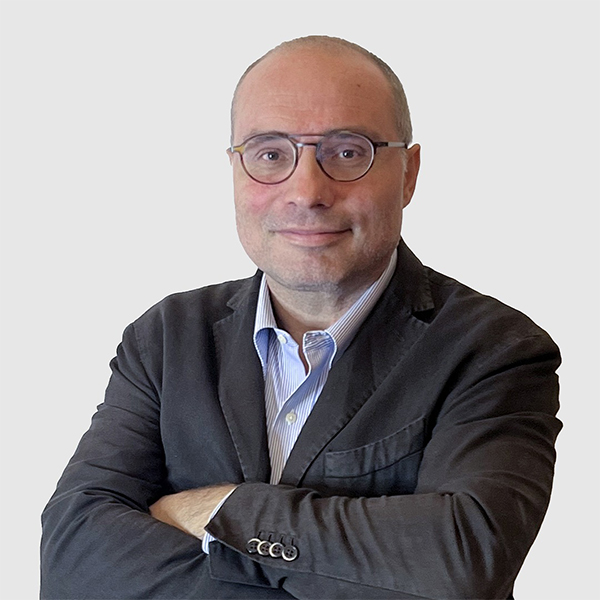
Stefano Firpo has served as Director General of Assonime since November 2022. From February 2021 to October 2022, he was Chief of Staff to the Minister for Technological Innovation and Digital Transition. He previously held the position of Director General of Mediocredito Italiano, the Intesa Sanpaolo Group bank specialising in financing solutions for small and medium-sized enterprises. He also served as Director General for Industrial Policy, Competitiveness and SMEs at the Ministry of Economic Development, as well as Head of the Minister’s Technical Secretariat, holding these positions from the Monti government through to the first Conte one. During the Renzi government, he was a member of the Economic Policy Coordination Unit at the Presidency of the Council of Ministers. Earlier in his career, he worked as an economist at the European Central Bank and within the Intesa Sanpaolo banking group, where he headed the office of the Chief Executive Officer. He graduated in Political Science from the University of Turin and later completed a postgraduate specialisation in International Economics at the London School of Economics. Stefano is passionate about the mountains, ski mountaineering and tennis. He enjoys cooking and reading. He has been awarded the honour of Knight of the Order of Merit of the Italian Republic.